BASAL BLOG

Models, results.
And what they mean in practice.

We write about basal releases, how the models work and applications worth trying.

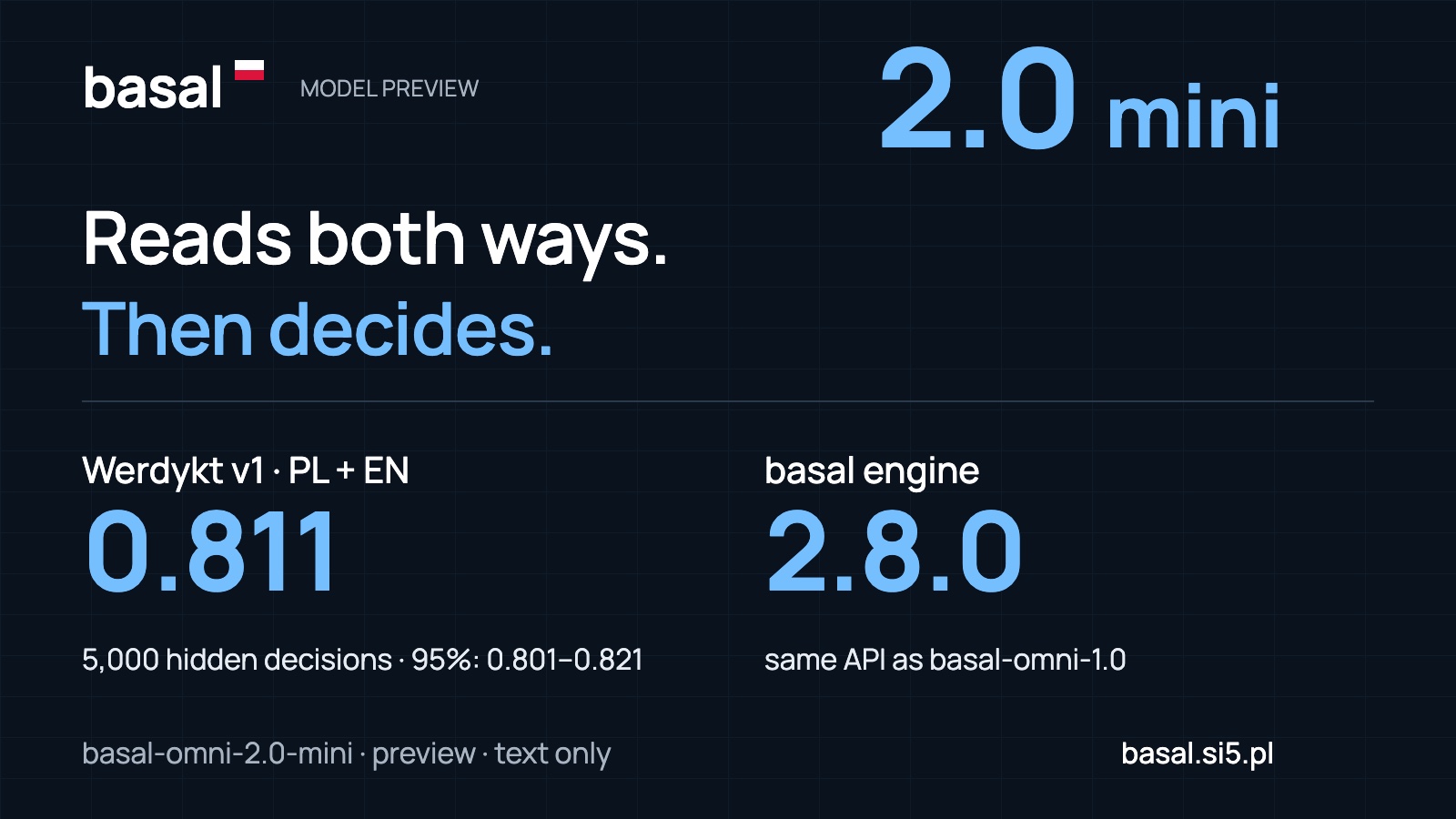
basal-omni-2.0-mini (preview): reads the state both ways, then decides. Werdykt v1 PL + EN 0.811 (5,000 hidden decisions, 95% interval 0.801–0.821); basal engine 2.8.0, same API as basal-omni-1.0; text only.
Model preview

basal-omni-2.0-mini (preview): two-way reading and 0.811 on Werdykt

An early release of the small model of basal-omni 2.0, on Gemma 4 E4B. The model reads the state in both directions before it answers and scores 0.811 on Werdykt (5,000 hidden decisions in Polish and English). It runs on the public basal engine 2.8.0, with the same API as basal-omni-1.0. The final basal-omni 2.0 comes later, together with the whole family: nano, mini, max and ultra.
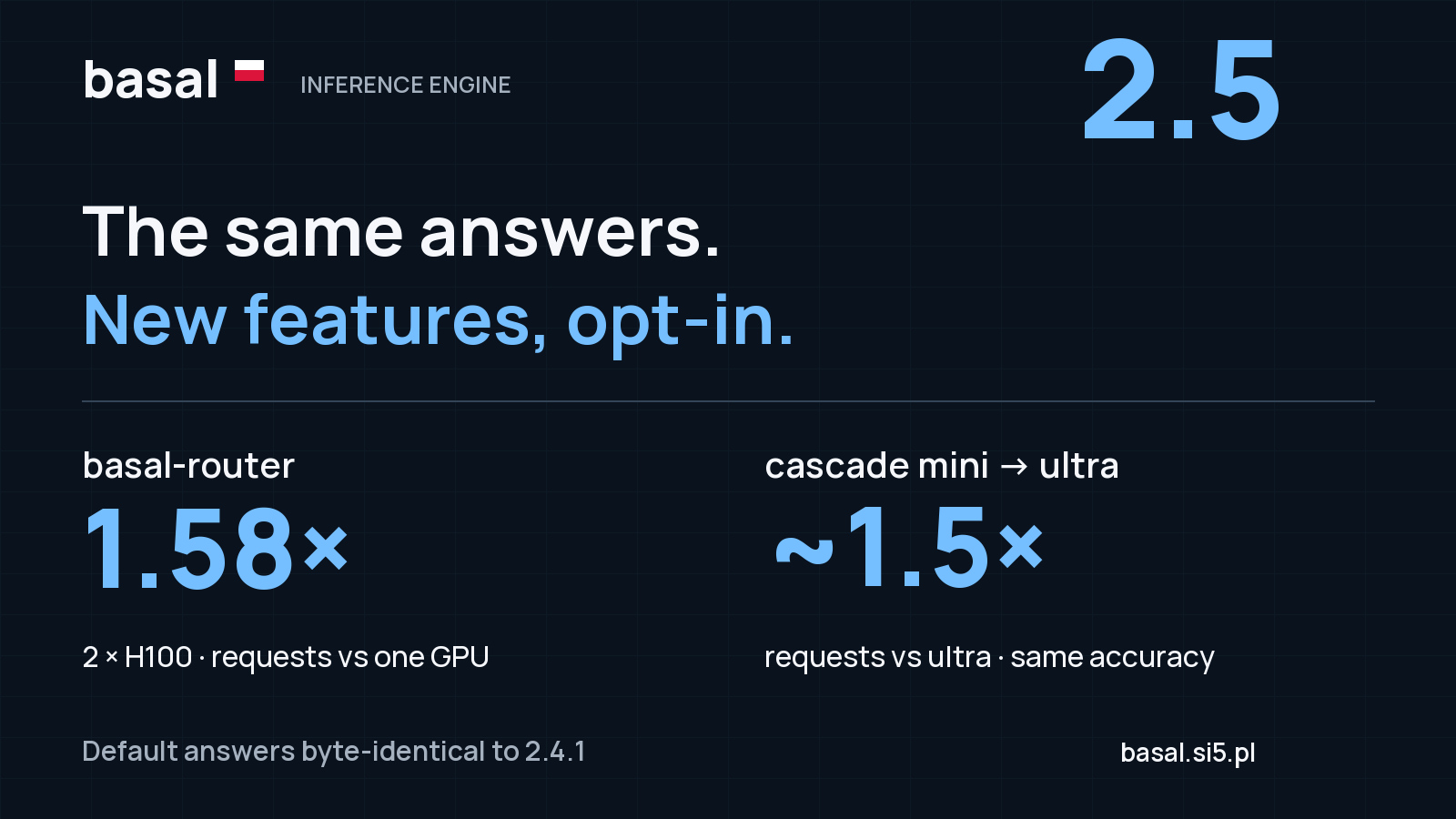
basal engine 2.5: basal-router 1.58× the requests on two H100s, a mini → ultra cascade about 1.5× the requests at the same accuracy; default answers byte-identical to 2.4.1.
New release

basal engine 2.5: many GPUs, a model cascade and the same answers

Default answers are byte-for-byte identical to 2.4.1, so upgrading is safe and new features are opt-in. basal-router combines multiple GPUs behind one port, the pico → mini → ultra cascade sends harder questions to a larger model, and ultra runs in FP8 on a single 80 GB card. We also cover the limits, the films in Basal Lab and patch 2.5.1.

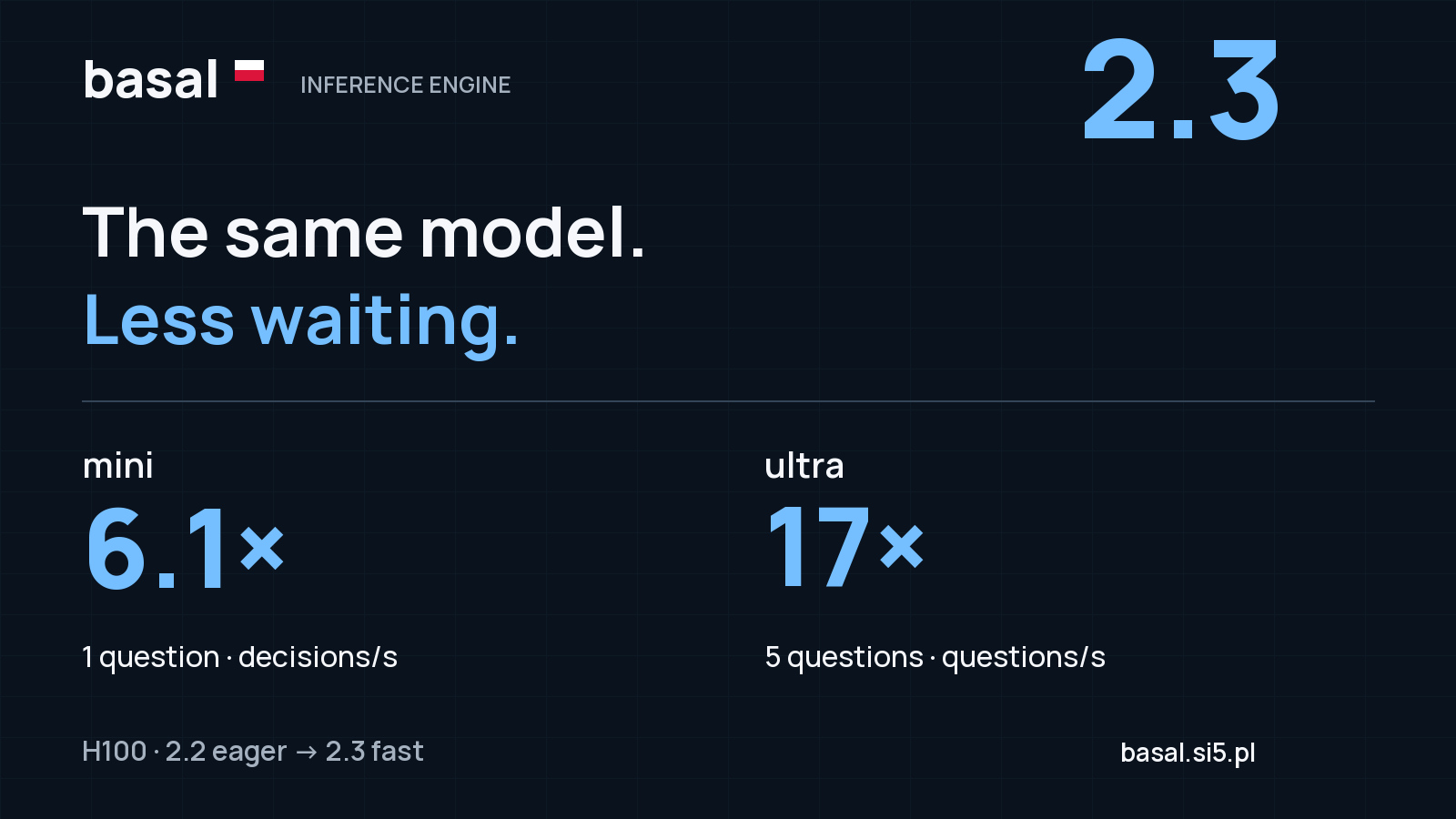
basal engine 2.3: mini 6.1× for one question, ultra 17× for five questions; H100 versus 2.2 eager.
New release

basal engine 2.3: the same model, up to 17× the throughput

basal-omni joins the fast CUDA-graph engine. On H100, single questions gain 3.0–6.1× and five questions about a long document gain 13.7–17× over 2.2’s eager path. We explain shared context, optimised computation, image and audio improvements, and the limits of this comparison.

New release

basal 2.2 engine: calibration on your own data

basal-calibrate in engine 2.2 checks on your own labelled examples whether the model’s confidence means what it says, and fits certified thresholds. The model decides alone only where the error target holds and hands the rest to a person. Plus FP8 and GGUF ports of basal-omni-1.0-mini and max.

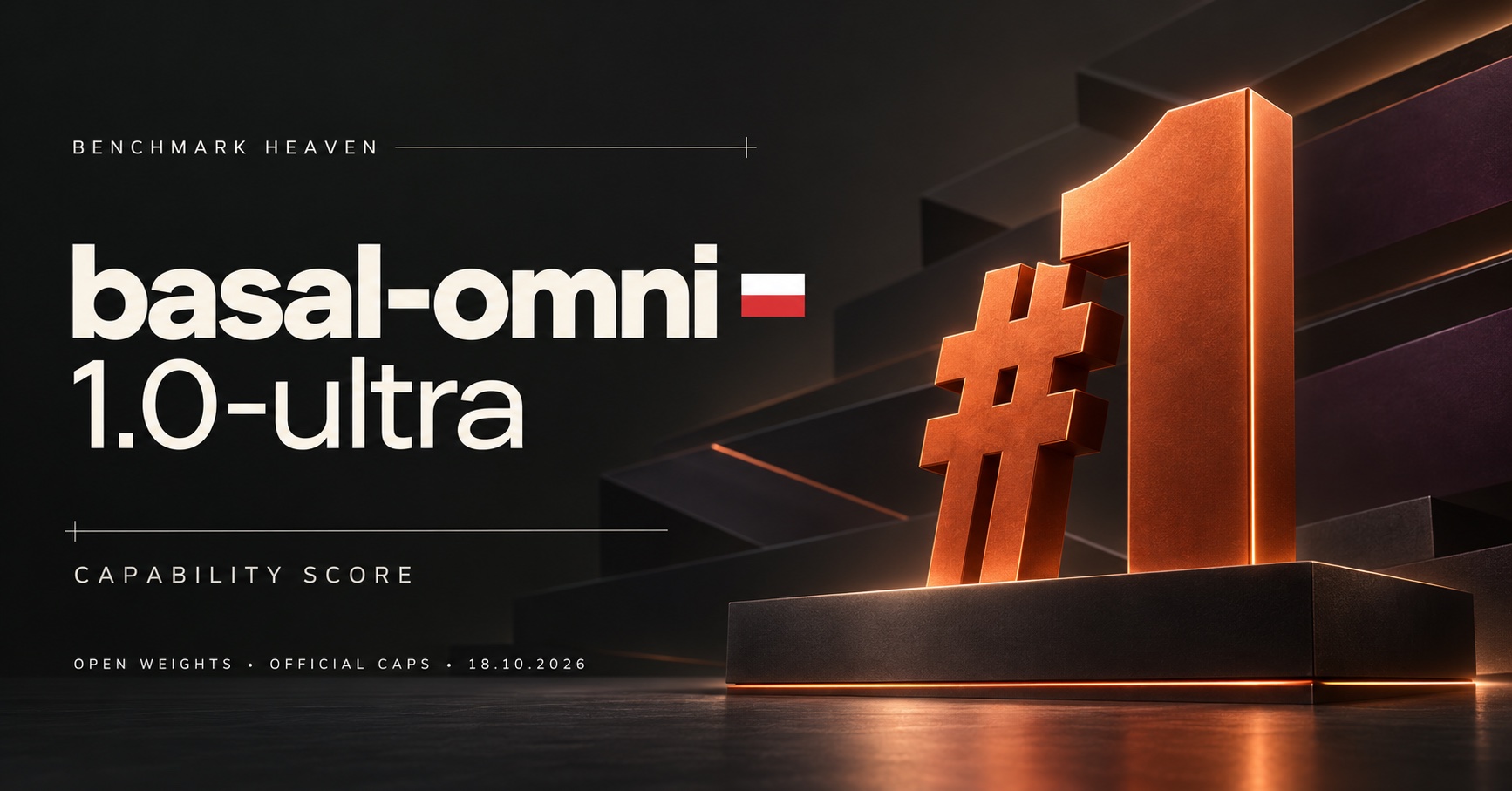
basal-omni-1.0-ultra — number 1 in JevBench Capability Score for open weights under the official caps, 18 October 2026.
Benchmark results

basal-omni takes the top spot on Benchmark Heaven’s open-weights leaderboard

basal-omni-1.0-ultra ranks first in JevBench Capability Score among open-weights models meeting the cost and latency caps. Its score of 82.54 also places it ahead of OpenAI Decisions and Microsoft-Decision-1. We compare the results with Perplexity, Jev and leading open-weights models, and explain the measurement conditions.

New release

basal-omni-1.0-ultra and engine basal 2.1

The most capable model of the basal family: basal-omni-1.0-ultra (31B) scores 0.879 on Werdykt, 5.8 points above Jev 1.14, and is level with Liquid d1-ultra. Engine basal 2.1 adds the experimental classify, verify, compress and extract tasks and leaves every other answer unchanged. The experimental basal-omni-1.1-max joins for the tasks.

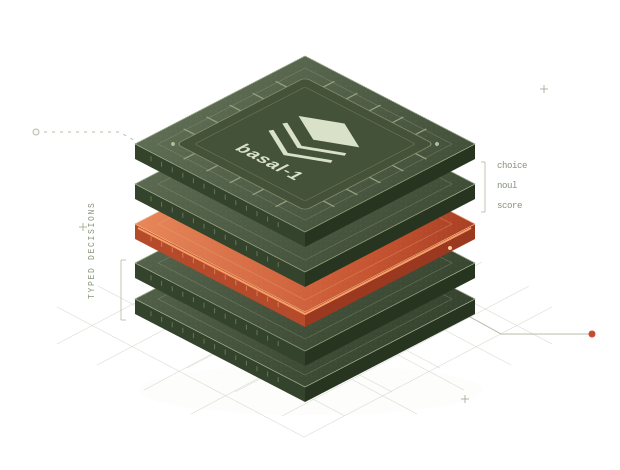
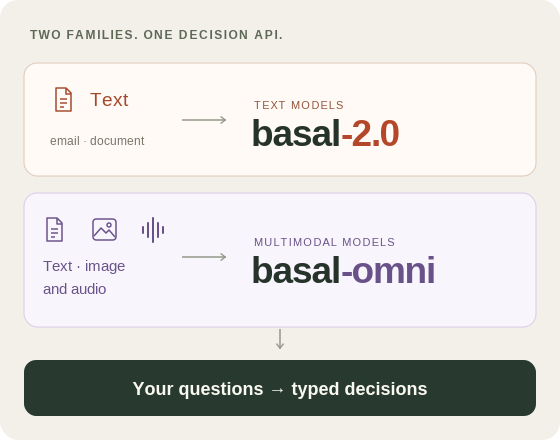
Text goes into basal-2.0. Text, images and audio go into basal-omni. Both families return typed decisions through a shared API.
New release

basal-2.0 and basal-omni — more decisions per second, better calibration, images and audio

Three open basal-2.0 decision models for Polish and English: 1.4–5.2× more decisions per second than basal-1.5, better-calibrated probabilities, up to 255 options per question and ports with their own calibration. Alongside them, experimental basal-omni: two Gemma 4-based models that also read images and audio. We also explain where the new models do not improve, and how they rank in Werdykt.

New release

basal-1.5 — three models, more possibilities

A dynamic classifier defined in every request, without additional training. Three sizes, new response schemas, faster multi-question processing and full Werdykt benchmark results — including Polish.

Meet the model

basal-1.0 — a dynamic classifier

An open classifier for Polish and English. How it works, what it can do and how long a decision takes — from a B300 server to a desktop HP ZGX Nano (Nvidia DGX Spark).

FROM READING TO BUILDING

Have a process waiting for a decision?

Explore sample requests and responses for 18 classifier use cases.

Open the use case catalog